
Si alguna vez ha visto una película sin sonido, comprende cuánto de la historia se pierde. No es solo el diálogo. Es el sutil crujido de una tabla del suelo, la música ascendente que genera tensión o la sirena distante que señala un drama inminente. Aquí es precisamente donde entran en juego los subtítulos SDH.
SDH, abreviatura de Subtítulos para sordos y con problemas de audición, es un tipo de subtitulado diseñado para traducir la experiencia completa auditiva de un video a texto, no solo las palabras habladas. Para cualquiera que se pregunte qué son los subtítulos SDH, son la clave para una experiencia de visualización verdaderamente inclusiva.
Descifrando el significado de SDH
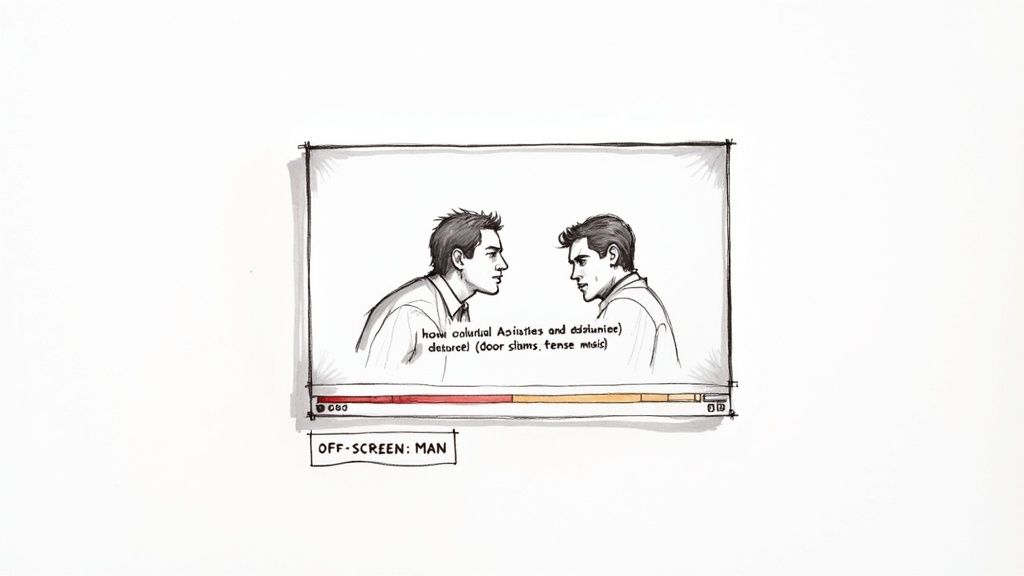
Imagine una escena de una película de terror en la que un personaje entra cautelosamente en una habitación oscura. Los subtítulos estándar no mostrarían nada hasta que hablen. Sin embargo, los subtítulos SDH describirían la [música ominosa sonando] o el [crujido de las tablas del suelo], lo que le daría a alguien que es sordo o tiene problemas de audición las mismas señales atmosféricas y sustos que a todos los demás.
Este es el propósito fundamental de SDH: crear una experiencia de visualización para audiencias sordas y con problemas de audición que sea lo más rica y completa posible. Operan bajo la suposición de que el espectador no puede oír nada, por lo que cada detalle de audio esencial debe transmitirse en texto.
Qué hace que los subtítulos SDH sean diferentes
La verdadera diferencia reside en la profundidad de la información proporcionada. Los subtítulos SDH van más allá de la simple transcripción del diálogo para incluir contexto esencial que los espectadores que pueden oír perciben de forma natural. Esto incluye detalles cruciales como:
- Efectos de sonido: Ruidos importantes que impulsan la narrativa, como
[sonido de teléfono]o[cristal rompiéndose]. - Pistas musicales: Descripciones de música que establecen el estado de ánimo, como
(suena música sombría)o(comienza una canción pop optimista). - Identificación del hablante: Etiquetas claras que identifican quién está hablando, lo cual es vital cuando un personaje está fuera de la pantalla o varias personas hablan a la vez.
El camino hacia este nivel de accesibilidad ha sido largo, evolucionando desde los intertítulos del cine mudo a principios de 1900 hasta las tecnologías de subtitulado modernas. Para aquellos interesados en la línea de tiempo completa, Digital Nirvana tiene una excelente descripción general de la historia del subtitulado.
Los subtítulos SDH son esencialmente un híbrido. Combinan la traducción del diálogo de los subtítulos estándar con las descripciones de audio detalladas que se encuentran en los subtítulos para personas con problemas de audición (CC). Esta combinación única los hace increíblemente efectivos para todas las formas de medios digitales.
En última instancia, comprender qué son los subtítulos SDH significa verlos como una herramienta para la inclusión genuina. Aseguran que el peso emocional, el suspense y la atmósfera de una historia no se pierdan cuando no se puede escuchar el audio.
Comparación de subtítulos SDH vs. subtítulos para personas con problemas de audición (CC)
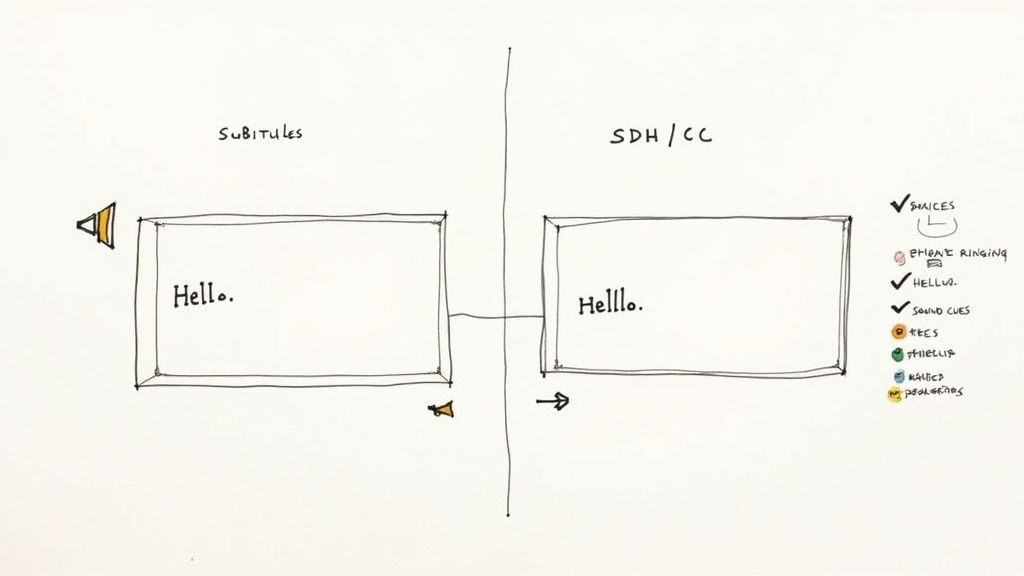
Es fácil entender por qué la gente a menudo usa 'subtítulos' y 'subtítulos para personas con problemas de audición' indistintamente, pero fueron desarrollados para diferentes necesidades y audiencias. Comprender estas distinciones es clave para reconocer por qué los subtítulos SDH se han convertido en el estándar para el contenido digital actual.
Analicemos los tres principales: subtítulos estándar, subtítulos para personas con problemas de audición (CC) y SDH. Cada uno sirve para un propósito específico. Los subtítulos estándar se crearon para superar las barreras del idioma, mientras que los subtítulos para personas con problemas de audición representaron un salto tecnológico significativo para la accesibilidad en la televisión por difusión.
Subtítulos estándar: los traductores de idiomas
Piense en los subtítulos estándar como para alguien que puede oír perfectamente pero no entiende el idioma hablado en la pantalla. Su función principal es traducir el diálogo. Es así de simple.
Dado que se presume que el espectador lo oye todo lo demás (la partitura musical, los efectos de sonido sorprendentes y las charlas fuera de la pantalla), estos subtítulos dejan fuera todo el audio que no es diálogo. Se centran exclusivamente en las palabras.
Subtítulos para personas con problemas de audición: el estándar de televisión
Los subtítulos para personas con problemas de audición (CC) fueron un cambio de juego para la accesibilidad televisiva en países como Estados Unidos y Canadá. Fueron diseñados específicamente para espectadores sordos y con problemas de audición, transcribiendo no solo el diálogo sino todos los sonidos significativos.
Esto significa que obtienes contexto crucial como [door slams], señales musicales (música tensa), e identificación del hablante, todo en el mismo idioma que el audio original. El aspecto "cerrado" simplemente significa que puedes activarlos o desactivarlos. La principal distinción, sin embargo, es técnica: los subtítulos para sordos tradicionales (CC) se codificaban directamente en las señales de televisión, una tecnología muy diferente a los archivos de texto utilizados para el contenido en línea de hoy.
Si bien tanto los subtítulos para sordos (CC) como los SDH (subtítulos para sordos y personas con problemas de audición) tienen como objetivo proporcionar una experiencia auditiva completa a través del texto, sus orígenes técnicos son distintos. Los subtítulos para sordos (CC) se crearon para la televisión, mientras que los SDH (subtítulos para sordos y personas con problemas de audición) se diseñaron para la flexibilidad de los medios digitales.
Subtítulos SDH Lo mejor de ambos mundos
Entonces, ¿cómo encajan los subtítulos SDH? Piense en ellos como un híbrido moderno que combina las mejores características de los subtítulos estándar y los subtítulos para sordos. Son "subtítulos" porque se entregan como simples archivos de texto que funcionan a la perfección en plataformas digitales como YouTube o Netflix.
Pero funcionan como "subtítulos" porque incluyen toda la información de audio no dialogada vital necesaria para una experiencia completa. Los subtítulos SDH están diseñados para una audiencia global y digital. Se pueden utilizar para la accesibilidad en el mismo idioma y para traducciones a idiomas extranjeros que también describen todo el paisaje sonoro. Esta increíble versatilidad es precisamente la razón por la que se han vuelto tan frecuentes.
Comparación de características SDH vs CC vs Subtítulos estándar
Aquí hay un desglose claro de cómo estos tres formatos se comparan entre sí en las características más importantes.
| Característica | Subtítulos estándar | Subtítulos para sordos (CC) | Subtítulos SDH |
|---|---|---|---|
| Audiencia principal | Espectadores que pueden oír pero no entienden el idioma. | Espectadores sordos o con problemas de audición (mismo idioma). | Todos los espectadores, incluidos sordos, con problemas de audición y de idioma extranjero. |
| Incluye diálogos | Sí | Sí | Sí |
| Incluye efectos de sonido | No | Sí | Sí |
| Incluye identificadores de hablantes | No | Sí | Sí |
| Formato técnico | Archivos basados en texto (por ejemplo, SRT, VTT) para medios digitales. | Codificado para señales de televisión. | Archivos basados en texto (por ejemplo, SRT, VTT) para medios digitales. |
| Apariencia | Varía, a menudo texto con un contorno. | Por lo general, texto blanco en un cuadro negro. | Varía, puede ser personalizado por el usuario o la plataforma. |
Como puede ver, los subtítulos SDH fusionan eficazmente la accesibilidad de los subtítulos para sordos con la flexibilidad técnica de los subtítulos estándar, lo que los convierte en el formato más versátil y ampliamente adoptado para el vídeo digital moderno.
Cómo SDH transforma la experiencia de visualización
Vayamos más allá de la jerga técnica. Los subtítulos SDH hacen más que simplemente poner palabras en una pantalla; traducen la experiencia de audio completa a texto. Para los espectadores sordos o con problemas de audición, esto cambia por completo las reglas del juego, transformando una imagen incompleta en una historia completa e inmersiva.
Imagine ver un thriller donde el héroe entra en una casa silenciosa y abandonada. Sin SDH, te perderías el [leve crujido de una tabla del piso arriba] o la sutil [música tensa creciendo]. Estos no son solo detalles menores: son los componentes básicos del suspenso que dan forma a toda la escena.
SDH proporciona este contexto crítico. Pistas como [teléfono sonando] o (susurrando) transmiten el mismo peso emocional y la información de la trama que el público oyente recibe de forma natural. Asegura que todos experimenten la historia como se pretendía.
Más que solo accesibilidad
Si bien SDH se creó pensando en la comunidad sorda y con problemas de audición, sus beneficios se extienden a un público mucho más amplio. Es una herramienta poderosa para el diseño universal que ayuda en muchas situaciones comunes:
- Entornos ruidosos: ¿Intentas ver un vídeo en una cafetería ruidosa o en transporte público? SDH facilita seguir, incluidos todos los efectos de sonido.
- Ajustes tranquilos: ¿Ver a altas horas de la noche o en una biblioteca? Puede disfrutar de la experiencia completa sin molestar a nadie.
- Aprendices de idiomas: Para aquellos que están aprendiendo un nuevo idioma, conectar las palabras habladas con las acciones y sonidos descritos mejora significativamente la comprensión.
Este nivel de accesibilidad es especialmente crucial en el contenido educativo. Una fantástica guía para crear y vender cursos en línea enfatiza la necesidad de llegar a todos los estudiantes. Entender cómo usar SDH es un paso fundamental hacia ese objetivo. Para pasos prácticos, aprender a añadir subtítulos a un video de YouTube correctamente es un gran punto de partida.
El impacto global de los medios inclusivos
La necesidad de este nivel de detalle es significativa. La Organización Mundial de la Salud estima que alrededor de 430 millones de personas —más del 5% de la población mundial— viven con pérdida auditiva discapacitante. Solo en Estados Unidos, alrededor del 15% de los adultos, o aproximadamente 37.5 millones de personas, reportan alguna dificultad para oír.
Estos números no son pequeños. Resaltan por qué la demanda de SDH descriptivos de alta calidad ha crecido tan rápidamente.
Al traducir el panorama sonoro completo de una escena, los subtítulos SDH no solo hacen que el contenido sea visible, sino que lo hacen equitativo. Aseguran que las intenciones de los personajes, los cambios emocionales y la tensión narrativa sean accesibles para todos, independientemente de su capacidad auditiva.
Creación de tus propios subtítulos SDH de alta calidad
Crear tus propios subtítulos SDH puede parecer técnico, pero es un proceso bastante sencillo. Hacer esto bien es más que simplemente marcar una casilla de accesibilidad; se trata de conectar con una audiencia más amplia y proporcionar a todos una experiencia de visualización completa y profesional.
El objetivo completo es transformar lo que está sucediendo en la pantalla, tanto el diálogo como los sonidos, en texto claro y contextual que cualquiera pueda seguir.
Este diagrama ilustra el flujo de trabajo, desde la captura de la escena hasta la entrega del contexto completo con SDH.
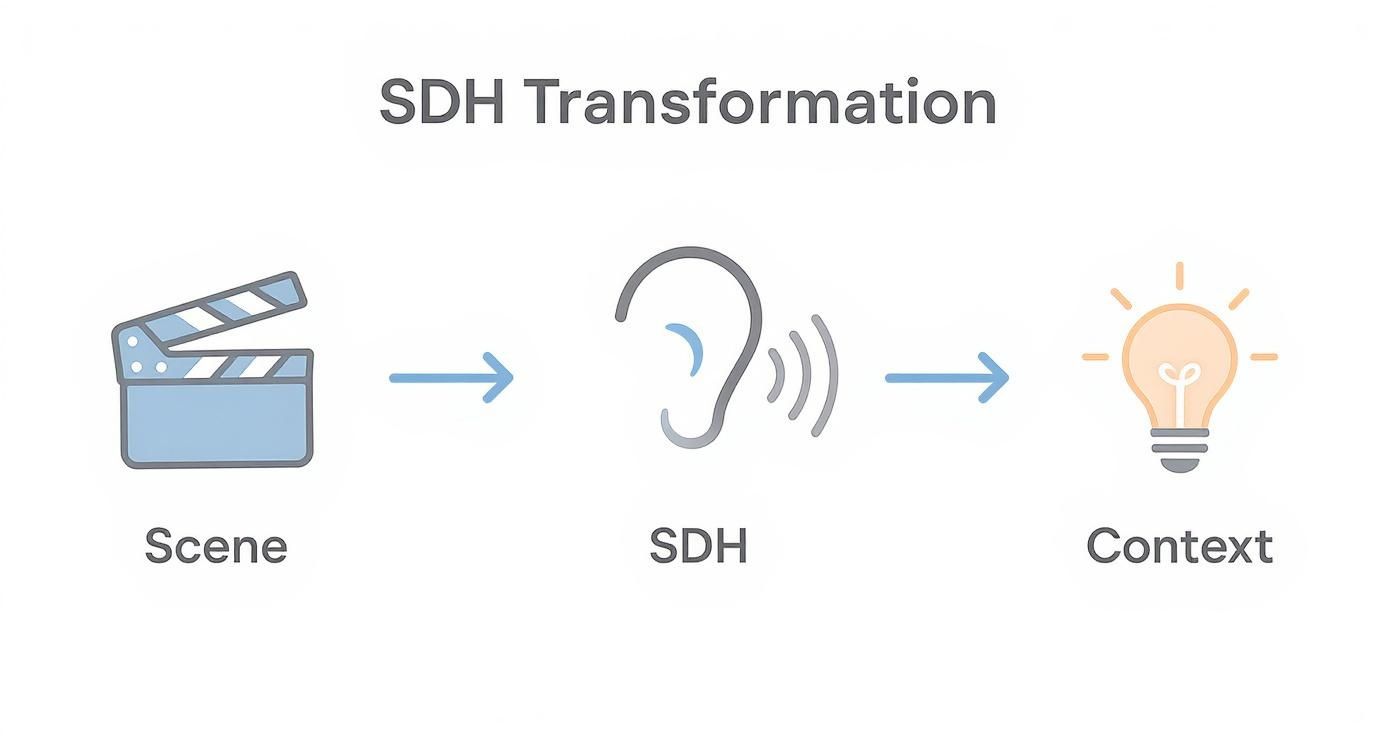
Como puede ver, crear SDH es mucho más que simplemente transcribir palabras. Se trata de interpretar todas las señales de audio para pintar una imagen narrativa completa para el espectador.
Paso 1: Comienza con una transcripción precisa
Cada gran archivo de subtítulos comienza con una cosa: una transcripción limpia y precisa. Esta es tu base. Necesita capturar cada palabra hablada exactamente como se dice. Podrías intentar esto manualmente, pero esa es una forma rápida de agotarte y terminar con una transcripción llena de errores.
Un enfoque mucho más eficiente es utilizar un servicio de transcripción automática. Una herramienta como MeowTxt puede convertir el audio de tu video en un archivo de texto de alta precisión en minutos, dándote una base sólida para trabajar. Esto te ahorra horas de trabajo tedioso y garantiza que el diálogo se capture correctamente desde el principio.
Paso 2: Añadir señales no verbales e identificadores de hablantes
Con tu diálogo transcrito, es hora de agregar los detalles descriptivos que hacen que tus subtítulos sean verdaderos SDH. Aquí es donde traduces todo el paisaje sonoro del video en texto.
Revisa tu transcripción y piensa desde la perspectiva de un espectador con audición. ¿Qué detalles de audio importantes notarían? Usa corchetes para los efectos de sonido y paréntesis para las descripciones musicales.
- Efectos de sonido: Usa corchetes para ruidos clave, como
[el teléfono vibra]o[la puerta se cierra de golpe]. - Música: Usa paréntesis para describir el estado de ánimo o el estilo de la música, como
(música pop optimista)o(comienza un tenso sonido de violín). - Identificadores de hablantes: Cuando no es obvio quién está hablando, especialmente para personajes fuera de la pantalla, agrega su nombre o una descripción, como
(SARAH, por teléfono)o[HOMBRE #2].
Paso 3: Formatea y sincroniza tus subtítulos
Una vez que tienes el texto completo, el paso final es formatearlo en un archivo de subtítulos estándar y sincronizarlo perfectamente con tu video. Los dos formatos más comunes son .SRT (SubRip Text) y .VTT (Web Video Text Tracks), que son compatibles con casi todas las plataformas. Encontrar un creador de SRT confiable es una parte clave de esta etapa.
El tiempo lo es todo. Cada línea de texto debe aparecer en la pantalla exactamente cuando ocurre el sonido y desaparecer poco después. Para que esto funcione correctamente, especialmente al sincronizar con efectos de sonido específicos, la precisión es crucial. Una habilidad valiosa para aprender es cómo dominar la visualización de YouTube fotograma a fotograma, lo cual es esencial para la sincronización detallada de subtítulos.
Conclusión clave: El objetivo es dar a los espectadores suficiente tiempo para leer el texto cómodamente sin que permanezca en la pantalla durante demasiado tiempo. Una buena pauta es apuntar a una velocidad de lectura de alrededor de 140-180 palabras por minuto.
Mejores prácticas para SDH claros y legibles
Hacer bien las palabras es solo la mitad del trabajo. Crear SDH que sean realmente fáciles de leer, sin sacar al espectador de la experiencia, es lo que separa el trabajo profesional de los esfuerzos amateurs.
Cuando se hace correctamente, el buen SDH se integra perfectamente en el fondo. Se convierte en una parte natural de ver el video, no en una distracción torpe. Para lograr esto, siga algunos principios básicos diseñados para la máxima claridad y la mínima fatiga visual.
Piense en ello como diseñar una interfaz de usuario limpia para todo el panorama sonoro de su video.
Manténgalo limpio y conciso
La primera regla es simple: respete la atención de su espectador. Los bloques de texto grandes y densos son imposibles de leer mientras también se intenta seguir la acción en pantalla. Esta es una receta rápida para la frustración del espectador.
Para evitar abrumar a su audiencia, cíñase a estas dos reglas de oro:
- Límites de caracteres: Mantenga cada línea con un máximo de 42 caracteres. Esto evita que el texto se extienda por toda la pantalla, lo que hace que sea mucho más rápido de escanear.
- Límites de línea: Nunca use más de dos líneas de subtítulos a la vez. Una tercera línea crea un muro de texto que es demasiado lento para procesar.
Estas restricciones lo alientan a ser conciso, que es exactamente lo que necesita para una experiencia de visualización limpia y accesible.
Utilice convenciones de formato estándar
La coherencia es clave. Los espectadores que dependen del SDH están acostumbrados a un lenguaje visual específico donde ciertas convenciones de formato tienen significados específicos. Cumplir con estos estándares garantiza que su audiencia comprenda de inmediato, sin necesidad de adivinanzas.
Al adherirse a las convenciones de la industria, crea una experiencia perfecta donde los espectadores no tienen que decodificar su significado. Se trata de hablar un lenguaje intuitivo que ya entienden.
Estos son los estándares universales que siempre debe seguir:
- Efectos de sonido: Describa los sonidos importantes que no son diálogo dentro de corchetes. Piense en
[vidrio roto]o[suena el teléfono]. - Pistas musicales: Use paréntesis para describir el estado de ánimo o el estilo de la música, como
(música sombría sonando)o(comienza una canción pop optimista). - Identificación del hablante: Use el nombre de un hablante seguido de dos puntos (por ejemplo, SARAH:) o una etiqueta en cursiva cuando el hablante no es visible, como (HOMBRE, susurrando).
Perfeccione su tiempo y ritmo
Finalmente, cuándo aparecen sus subtítulos es tan crítico como lo que dicen. El texto que aparece demasiado tarde o se queda demasiado tiempo puede arruinar una escena y causar una confusión significativa. El objetivo es sincronizar cada subtítulo perfectamente con su sonido correspondiente.
Un subtítulo debe aparecer en el momento en que comienza un sonido y desaparecer justo después de que termina. Esto le da al espectador el tiempo suficiente para leerlo cómodamente antes de que ocurra el siguiente diálogo o efecto de sonido. Para cualquier persona que publique en YouTube, dominar esto es esencial. Puede aprender exactamente cómo agregar subtítulos a un video de YouTube para que estén perfectamente sincronizados cada vez.
Algunas preguntas comunes sobre SDH
Hemos cubierto mucho terreno sobre qué son los subtítulos SDH, y a menudo surgen algunas preguntas prácticas. Aquí es donde la teoría se encuentra con la práctica para los creadores de contenido y los espectadores curiosos.
Unamos todo con respuestas claras a las consultas más comunes.
¿Puedo usar SDH si no tengo problemas de audición?
Absolutamente. Es un error común que el SDH sea exclusivo de la comunidad sorda y con problemas de audición. Si bien ese es su propósito principal, los beneficios del mundo real son mucho más amplios.
Muchas personas las usan por varias razones. ¿Alguna vez has intentado ver un video en un café ruidoso o a altas horas de la noche con el volumen bajo? SDH rellena todos los vacíos: diálogos, efectos de sonido e indicaciones musicales. También es una excelente herramienta para los estudiantes de idiomas que intentan conectar las palabras habladas con los sonidos y acciones descritos.
¿Son los subtítulos automatizados lo suficientemente buenos para SDH?
No del todo, al menos no por sí solos. Si bien las herramientas de transcripción impulsadas por IA se han vuelto increíblemente precisas, aún tienen un punto ciego importante cuando se trata de crear verdadero SDH.
Una IA puede transcribir diálogos con una precisión impresionante, pero casi siempre se perderá elementos cruciales que no son del habla. Podría capturar una conversación tensa a la perfección, pero ignorar por completo la [música ominosa que aumenta] o [sirena distante que gime] que en realidad establecen el ambiente de la escena.
La transcripción automatizada es un gran ahorro de tiempo y el punto de partida perfecto. Sin embargo, aún necesita un toque humano para agregar las indicaciones de audio descriptivas que hacen que los subtítulos SDH sean realmente accesibles.
Piensa en la automatización como verter la base y en un editor humano como construir la casa.
¿Qué plataformas admiten subtítulos SDH?
La buena noticia es que el soporte para SDH es ahora casi universal. Debido a que se entregan en formatos de archivo estándar como .SRT o .VTT, son increíblemente compatibles.
Encontrarás un sólido soporte SDH en todas las plataformas principales:
- Servicios de transmisión: Gigantes como Netflix, Hulu, Disney+ y Amazon Prime Video dependen en gran medida de SDH para la accesibilidad y las opciones de idioma.
- Plataformas de video: YouTube y Vimeo tienen un excelente soporte, lo que facilita que los creadores suban sus propios archivos .SRT o .VTT.
- Reproductores de video: Casi cualquier reproductor de video moderno, desde VLC hasta QuickTime, puede leer y mostrar archivos SDH sin ningún problema.
Este soporte generalizado significa que si inviertes el tiempo para crear subtítulos SDH adecuados, tu audiencia podrá verlos casi en cualquier lugar. Es el estándar moderno por una razón.
¿Estás listo para crear subtítulos SDH perfectamente precisos y accesibles para tu propio contenido? MeowTxt puede ayudar. Comienza generando una transcripción limpia y editable en minutos. Nuestro servicio se encarga del arduo trabajo de transcripción con una precisión de hasta el 97,5 %, lo que te brinda la base perfecta para agregar tus indicaciones descriptivas y exportar un archivo SRT pulido. Pruébalo ahora en https://www.meowtxt.com.


